World Models
The World
with the Word
Character's Inner World
Not just a database. A place.
World models are one of the most discussed ideas in AI right now — and for good reason. The claim is simple: rather than predicting the next word, a truly intelligent system should build an internal model of how the world works. Causality. Context. Consequence.
Figures doesn't claim to have solved that problem. It claims something narrower and more immediate: that a character who behaves as if they inhabit a world produces a fundamentally different encounter than one who merely references it.
At Figures, every character speaks from inside a world — its geography, its politics, its relationships, its era. Marcus Aurelius doesn't just know facts about Rome — he speaks from inside it: from the tent on the Danube, from the pressure of the senate, from a philosophy he was still writing. That grounding is what makes the encounter feel like meeting someone rather than querying something.
Design
When chat is the answer — and when it isn't
Chat is a remarkable interface. It's direct, fast, and forgiving. For questions with answers — facts, summaries, tasks — there's nothing better. But chat has a shape: it's linear. Turn by turn. You ask, it responds. The world stays offscreen.
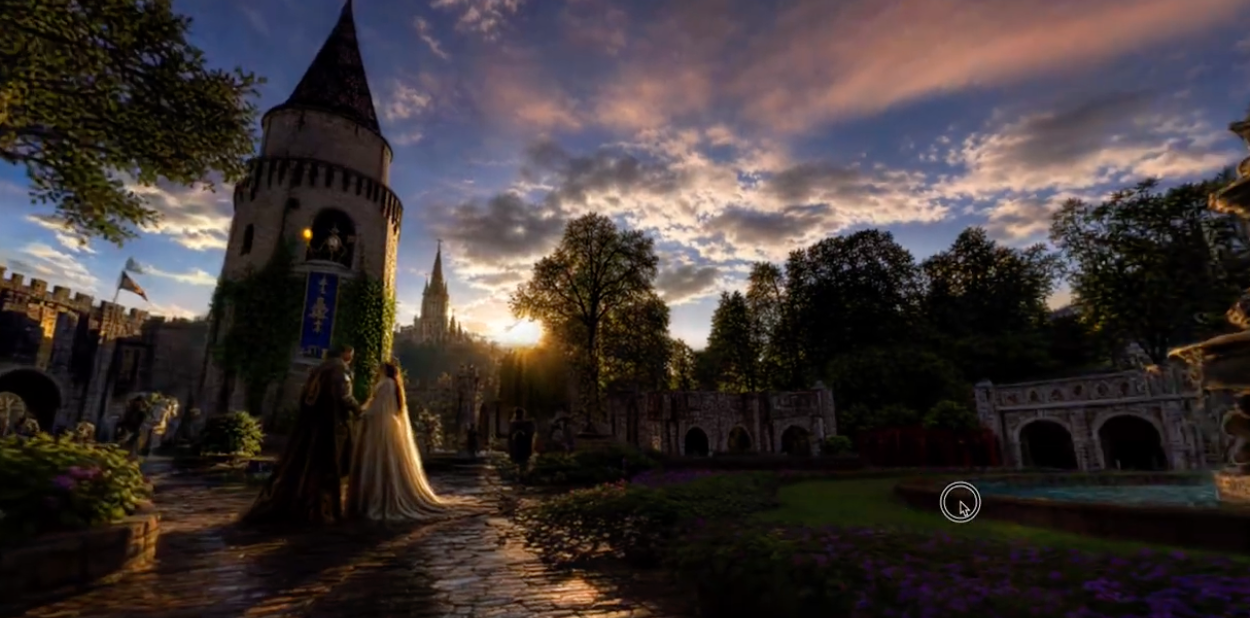
World exploration has a different shape. It's spatial, ambient, discoverable. Figures is not a game. There are no NPCs to find, almost no quests to complete. The world exists so the character can be real — not primarily for the user to explore it. But these are reactive environments we call Affective World Rendering that can change with conversations.
Chat
The primary encounter. Direct, purposeful, conversational. You ask, the Figure answers. The world stays present but offscreen.
The World
The context that makes chat meaningful. Not a game with NPCs but a place the Figure inhabits. You feel it in how they speak, what they reference, what they refuse to say.
The Threshold
The moment of entry. Choosing which door to walk through is itself an act of discovery — you find something by deciding where to go before you know what to ask.